Flood protection services
Four services, each ending in something you can hand to your board, your engineer, PUB or your insurer. Most clients start with the assessment, because it sets the flood level everything else is built to.
Flood risk assessment
How high water can get at your site, what sits below that level, and what to do about it, in order of cost and effect. Done before land is bought, when moving a building costs nothing, or for a site already running.
What you get
- Hazard review. River, rainfall, coastal and drain surcharge flooding, plus internal water from cooling and pipework.
- Design flood levels at the 100, 500 and 1,000 year return periods, with a climate allowance, and the level we recommend you build to.
- Level survey of floors, critical plant and every opening and cable or pipe entry, compared with that level.
- Dependency check on grid supply, fibre routes, fuel delivery and the roads staff use.
- Gap analysis against the standards and rules that apply to you (table below).
- Options, ranked: raise, seal, fit permanent barriers, fit removable barriers, in that order of preference.
What we need from you
Site plan and any level survey, drawings showing where switchgear, generators, fuel, UPS and chillers sit, the site's flood or water ingress history, and your latest insurer survey report if you have one.
What we check your site against
| Benchmark | What it asks for |
|---|---|
| PUB Code of Practice on Surface Water Drainage (Singapore) | Platform at least 4.0 m SHD (south coast) or 4.5 m SHD (north coast), or 600 mm above the adjacent road for industrial and commercial sites, whichever is highest. Basement entrances 300 mm above that. Critical M&E in critical infrastructure at platform level or higher (clause 2.5). |
| FM Global Data Sheet 1-40 | Widely cited as: build above the 500 year flood (0.2% a year) plus 0.3 to 0.6 m freeboard. |
| ASCE 24-24 | Essential facilities designed to the 1,000 year flood. |
| TIA-942-C (2024) | A documented flood risk analysis and mitigation, in place of fixed distances from flood zones. |
| MSMA 2nd edition (Malaysia) | Stormwater compliance is a condition of plan approval. There is no national minimum platform level, so the design level is yours to set. |
FM data sheet figures are as widely cited from unofficial copies. We confirm the current text for your project.
Flood barrier systems
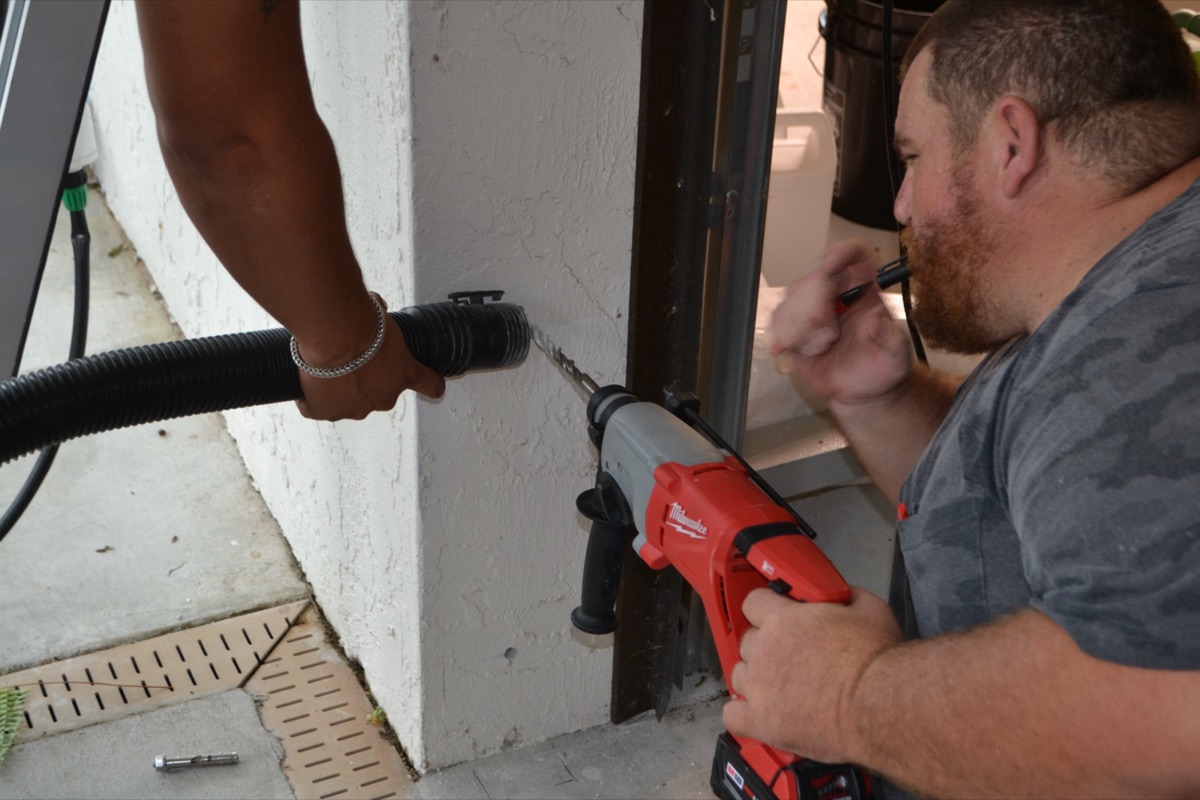
Removable aluminium barriers for doors, loading docks, roller shutters, ramps and basement entrances, built and installed with Rubicon Flood Control. Planks stack between fixed side posts and seal against the floor. They are stored between events and put up when a warning comes.
System specification
| Planks | 6063-T6 aluminium, 8 in (203 mm) per plank, 2.15 lb per linear foot (3.2 kg/m) |
|---|---|
| Height | 3 to 9 planks, 25 to 73 in (635 to 1,854 mm) |
| Plank section | 40 mm deep, 2.03 mm wall |
| Side posts | 90 × 60 mm, 3.8 mm wall. Removable centre posts on wide openings |
| Seals | Closed-cell EPDM at the floor and between planks, compressed from above |
| Fixing | Stainless steel sleeve anchors into masonry, bedded in silicone |
| Finish | Electrophoretic coating, optional powder topcoat |
Specification as published by Rubicon Flood Control. Plank count, posts and layout are set by measuring each opening.
How an installation runs
- Trace the water path to each opening, including drains and cable entries.
- Measure every opening and check the wall and floor it will fix to.
- Design and quote, opening by opening.
- Fabricate and install posts and seals.
- Deploy with your team and time it. If deployment takes longer than the warning the site gets, we tell you to use a permanent barrier instead.
- Inspect every season, and keep the records. In Singapore those records support the annual flood barrier declaration PUB requires under clause 13.2.1.
A barrier protects an opening up to its height. It does not stop seepage through a slab or water backing up through drains, so penetration seals and backflow valves are specified at the same time. See how to choose commercial flood barriers.
Flood emergency response plan
A barrier in storage protects nothing. The plan says who acts on which warning, how fast barriers go up, how fuel and staff reach the site when roads flood, and how you restart. We write it for your site, run the first drill and time it.
What the plan covers
- Triggers. Which official warnings and on-site readings start each action, with named owners.
- Barrier deployment. Sequence, crew, tools and the drilled time for each opening.
- Fuel and access. Alternative routes, delivery contracts and on-site reserve for when roads are cut.
- People. Who stays on site, where they shelter and what supplies are kept there.
- Shutdown and restart. What is powered down, in what order, and the checks before it comes back.
- Drill record and a review after every monsoon or storm season.
When a plan is required
| Source | Requirement |
|---|---|
| FM Global Data Sheet 5-32 (Data Centers) | Widely cited as calling for a written flood emergency response plan wherever the 500 year flood would reach the site. |
| Singapore coastal protection law, 2026 | Owners of transiently floodable premises keep a flood response plan and run periodic drills. Duties apply from around the early 2030s. |
| Singapore Digital Infrastructure Act, 2026 | Data centres of 10 MW or more need prescribed business continuity and disaster recovery plans. Commencement not yet announced. |
What goes in a plan, in detail: flood emergency response plan guide.
Insurer and broker report
Underwriters decide whether to offer flood cover, and at what deductible and sub-limit, from the evidence in front of them. We put that evidence in one report. Brokers and risk engineers can commission it directly.
What the report contains
- Site and critical plant levels against the design flood level.
- Protection in place: what is raised, sealed and behind barriers, with photos.
- Barrier specification, installation and inspection records.
- The flood emergency plan and the latest drill time.
- Dependencies (power, fibre, fuel, access) and how each is covered.
How flood is insured
| Malaysia | Singapore | |
|---|---|---|
| Property | Flood is outside the standard fire policy. It is added as a special perils extension for extra premium. | Commercial all-risks policies usually include flood. Insurers screen basements at known flood-prone sites. |
| Business interruption | A separate policy with its own special perils extension, so flood has to be added there too. | Usually follows the property cover. Check sub-limits and whether utility outages are covered. |
Sources: QBE Malaysia fire policy wording, Chubb Singapore proposal form. For data centres, AXA XL says capacity in Asia-Pacific goes to sites with "credible recovery plans" (InsuranceAsia News). More in data centre flood insurance.
Frequently asked questions
- Do I need an assessment before buying flood barriers?
- For a critical site, yes. Barriers come after getting floors and critical plant above flood level, and their height and type depend on the design flood level and the warning time the site gets. An assessment sets both.
- Who builds and installs the barrier systems?
- Barrier systems are built with our partner Rubicon Flood Control, which measures, fabricates and installs removable aluminium flood barriers. Every opening is measured on site before a system is specified.
- Can you work with our existing engineer, contractor or broker?
- Yes. Assessments and plans are written to slot into a design team's or broker's process, and we can report directly to your insurer's risk engineer if you ask us to.
- How are services priced?
- Per site, after a scoping call. The number of buildings, openings and critical systems sets the scope. Barrier systems are quoted after every opening is measured.